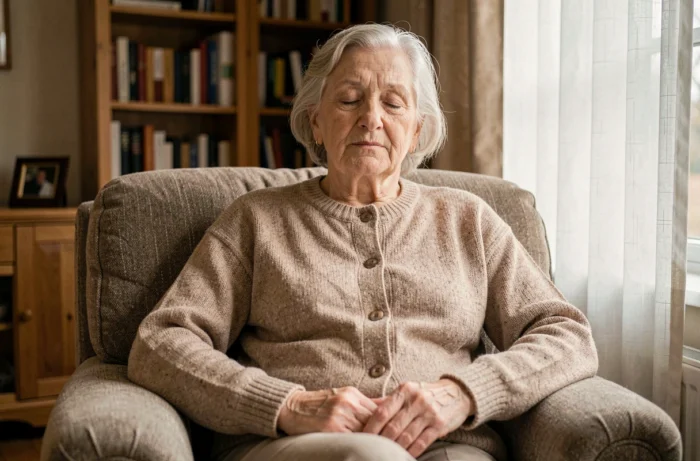
In nursing homes or at home, we regularly observe elderly individuals who keep their eyelids closed for a good part of the day, even during conversations. The common reflex is to think that they are dozing off or disinterested in their surroundings. The reality is more nuanced: several physiological, neurological, and medication-related mechanisms lead the aging body to reduce eyelid opening, sometimes in a nearly permanent way.
Dry eyes and discomfort: the most underestimated cause
When accompanying an elderly loved one who refuses to open their eyes after waking up or during meals, we rarely think about the tear film. The mechanism is straightforward: with age, tear production decreases and evaporation accelerates. As a result, opening the eyelids becomes physically uncomfortable, even painful in a dry or ventilated environment.
VIDAL describes dry eyes as an imbalance of the tear film related to insufficient production or excessive evaporation. Air conditioning in nursing home rooms, forced air heating, and even fans exacerbate the phenomenon. One can then understand why the person spontaneously keeps their eyes closed: it is a protective reflex, not a sign of withdrawal.
One point that caregivers are well aware of but families often ignore: some common medications worsen dry eyes. Antihypertensives, diuretics, antihistamines, antidepressants, and even some eye drops for glaucoma are among the treatments that reduce eye lubrication. Before interpreting behavior, it is worth checking the prescription with the attending physician.
To delve deeper into the subject, a detailed article discusses the case of the elderly person who keeps their eyes closed on Just Healthy, exploring various medical causes and management options.
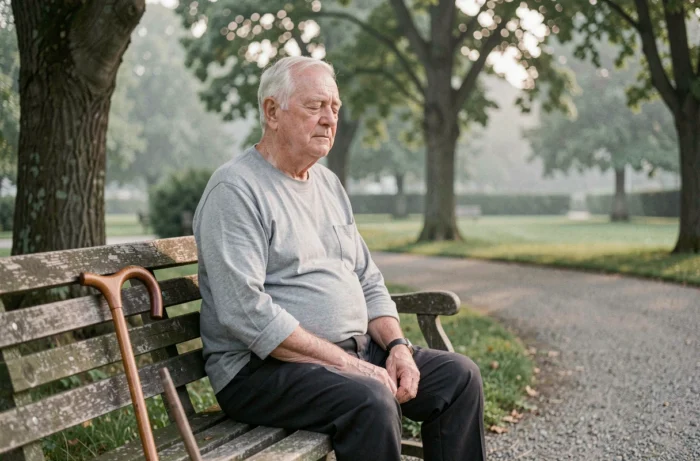
Drooping eyelids and neurological disorders: distinguishing the trivial from the serious
The relaxation of eyelid tissues is part of normal aging. The eyelid elevator muscles lose tone, and the skin gradually sag over the visual field. In moderate cases, the person compensates by raising their eyebrows or tilting their head back.
The problem arises when this eyelid drooping (ptosis) appears asymmetrically or suddenly. A drooping eyelid on one side may signal a neurological issue that goes beyond simple skin aging. Among the relevant conditions:
- Autoimmune myasthenia, a neuromuscular disease that causes abnormal fatigue of the eye muscles, often more pronounced at the end of the day.
- A cerebrovascular problem (stroke or transient ischemic attack), especially if the ptosis is accompanied by speech disturbances or weakness on one side of the body.
- Affecting the oculomotor nerve, which may be related to poorly controlled diabetes or nerve compression.
A recent eyelid asymmetry always warrants prompt medical advice. This is not about aesthetics but a warning signal that relatives and caregivers must recognize.
Sliding syndrome and withdrawal: when closing the eyes reflects a mental state
In geriatrics, sliding syndrome refers to a global disengagement of the elderly person from their environment, often after a shock (hospitalization, bereavement, moving to an institution). The person eats less, speaks less, and frequently keeps their eyes closed without actually sleeping.
This picture does not fall under an eye condition. Closing the eyes here reflects relational withdrawal, a form of retreat that can resemble clinophilia (the tendency to stay in bed permanently). The distinction from simple fatigue depends on the context: if the behavior suddenly settles after a destabilizing event and is accompanied by a refusal to eat, the hypothesis of sliding should be considered.
Depression in the elderly, often underdiagnosed, produces similar effects. Loss of motivation, social isolation, and anxiety lead to a reduction in visual interactions. The person does not have eye pain; they simply no longer wish to look.
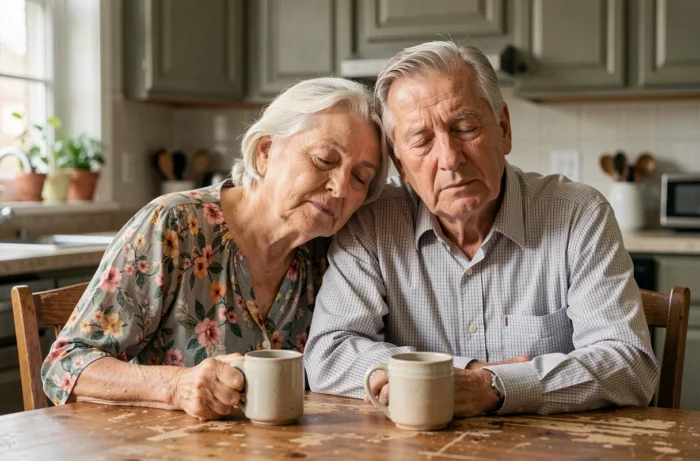
How to differentiate in practice
Feedback varies on this point among caregiving teams, but a few guidelines help orient the evaluation:
- If the person opens their eyes when spoken to softly and closes them as soon as one moves away, the relational or depressive pathway is likely.
- If they complain of burning, tingling, or blink very frequently, dry eyes or blepharitis deserve exploration.
- If the closure is asymmetrical or worsens throughout the day, a neurological assessment is necessary.
- If the behavior appears in an end-of-life context, it may reflect a progressive decrease in consciousness, a situation that requires appropriate palliative care.
Fall risk and loss of balance: the direct consequence of reduced vision
Keeping the eyes closed or half-closed drastically reduces the visual information transmitted to the brain to maintain balance. Vision plays a major role in postural control, alongside the vestibular system (inner ear) and proprioception (joint and muscle sensors).
When an elderly person voluntarily or involuntarily limits their visual input, the risk of falling increases significantly. Health professionals actually consider this behavior an indicator of fragility that should trigger a postural assessment.
On the ground, a few concrete measures can limit the damage: check the lighting in living spaces (soft but sufficient light, without glare), install night lights for nighttime movements, and address the cause of eye closure rather than its consequences. A simple treatment with artificial tears can sometimes suffice to restore visual comfort that encourages the person to keep their eyelids open.
Care management is based on a simple logic: first identify the underlying mechanism (dryness, mechanical ptosis, neurological disorder, psychological retreat), then adapt the response. An ophthalmologist, geriatrician, or neurologist can intervene depending on the situation. Failing to act means accepting a chain degradation, from vision to balance, from balance to falling, and from falling to loss of autonomy.