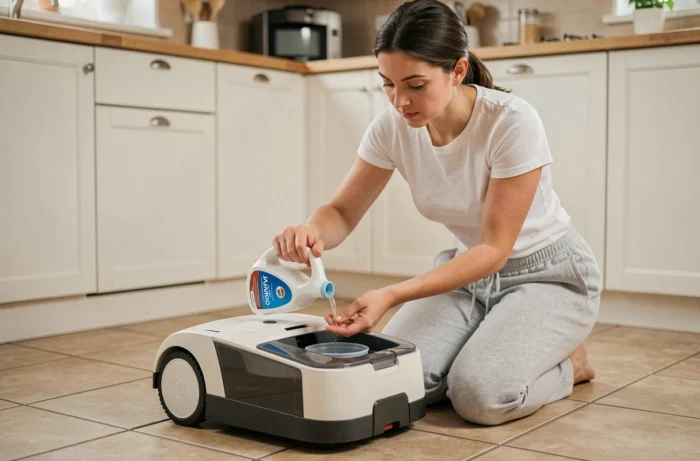
We just used the Tineco on the entire ground floor, the dirty water tank is full, and one question keeps coming up: can we add Sanytol to the tank to disinfect the floor at the same time? The temptation is strong, especially when there are children or pets around.
Sanytol floor cleaner is a common product in French cupboards, but Tineco washing vacuums operate with sensors and internal circuits that do not tolerate just any detergent. Here’s what you can do, what risks you face, and how to proceed concretely.
Tineco Sensors and Sanytol Formulation: Why the Mixture is Problematic
Tineco washing vacuums are equipped with smart sensors that analyze the dirt in the water in real time. These sensors automatically adjust the suction power and the flow of clean water. A detergent that is too concentrated or foamy disrupts this reading and can impair the device’s operation.
The Sanytol multi-purpose cleaner contains disinfecting agents and surfactants. These surfactants produce foam, even in small amounts. In a regular bucket, this isn’t a problem. In the closed circuit of a Tineco, the foam can rise towards the motor or clog the filters.
Tineco markets its own cleaning solutions, formulated to limit foam production and remain compatible with the sensors. The manufacturer specifies that the use of a detergent must comply with the model and its instructions, as not all devices in the range accept the same liquids. We are indeed talking about compatibility by model, not a universal rule.
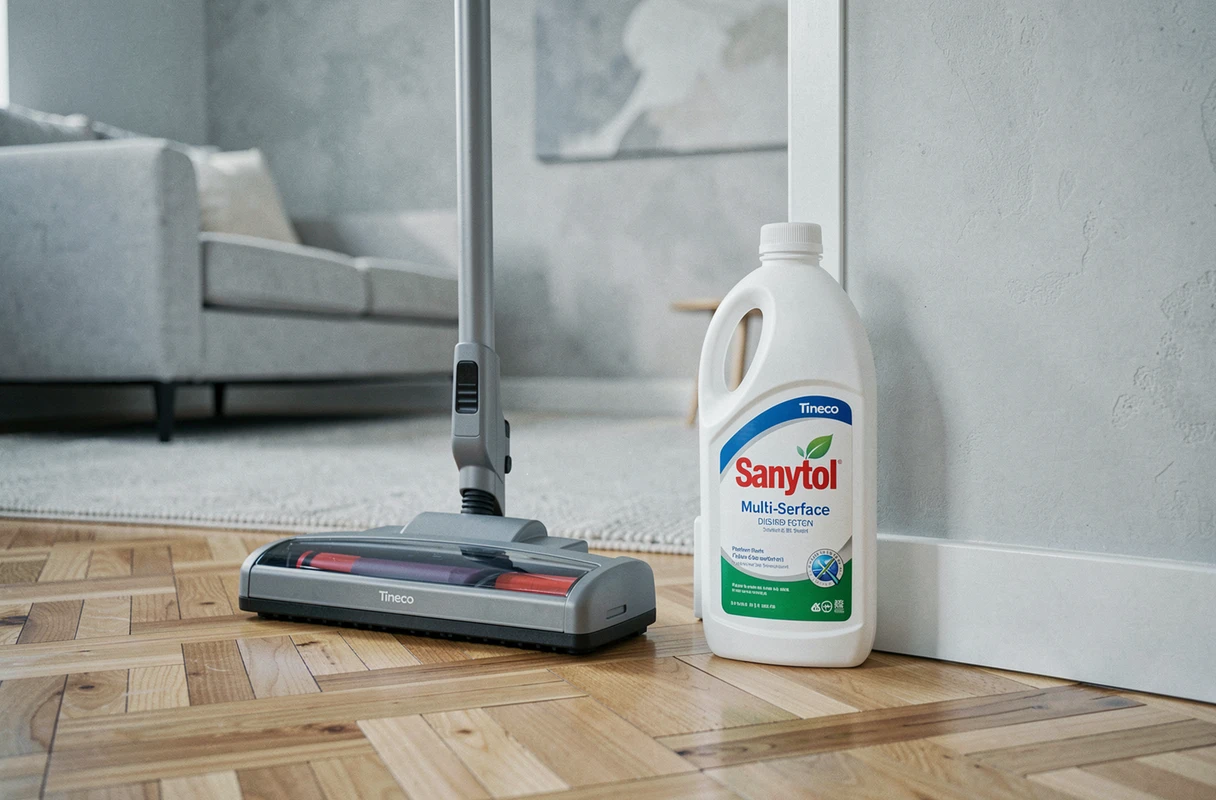
Before attempting anything, you can use Sanytol floor cleaner with a Tineco by following a specific protocol, which avoids navigating blindly.
Sanytol Dosage in a Tineco: The Rule Not to Exceed
The Sanytol product sheet mentions a maximum dosage of 3% of the tank for use with a washing vacuum. This is a figure from the manufacturer of the cleaning product, not Tineco. The nuance matters: Sanytol indicates that its formula is compatible with robots and washing vacuums, but under strict conditions.
Specifically, on a standard Tineco tank, this corresponds to a very small amount of product. Half a cap often represents the maximum reasonable amount. Beyond that, the risk of excessive foam increases, along with the risk of damaging the device.
What Sanytol Says About Compatibility
Sanytol declares compatibility with washing vacuums, but frames it with several conditions:
- Follow the manufacturer’s instructions for the vacuum (here Tineco) and check that the model allows the addition of detergent
- Never exceed the recommended concentration, as excess can damage the device
- Avoid any device whose instructions explicitly prohibit the addition of third-party cleaning products
In short, Sanytol is covering itself. The final responsibility lies with the compatibility defined by Tineco for each specific model.
What Tineco Says About Third-Party Products
Tineco advises against using unofficial detergents. The use of a third-party product can void the manufacturer’s warranty if damage is found. Experiences vary on this point: some users have been using Sanytol for months without visible problems, while others report foam alerts from the very first use.
Field Protocol for Using Sanytol Without Damaging Your Tineco
If you still decide to attempt adding Sanytol, here’s the method that limits risks. It does not eliminate the risk of losing the warranty, but it reduces the chances of material damage.
You start by filling the tank with clean water before adding Sanytol. Pouring the product in first creates too strong a concentration at the bottom of the tank. Half a cap maximum is sufficient. Then close it, shake lightly to dilute, and run a cycle on a small area to observe the device’s behavior.
During the passage, monitor two things: the formation of foam in the dirty water tank and the behavior of the indicators. If foam appears in quantity, stop immediately and rinse the circuit with clear water.
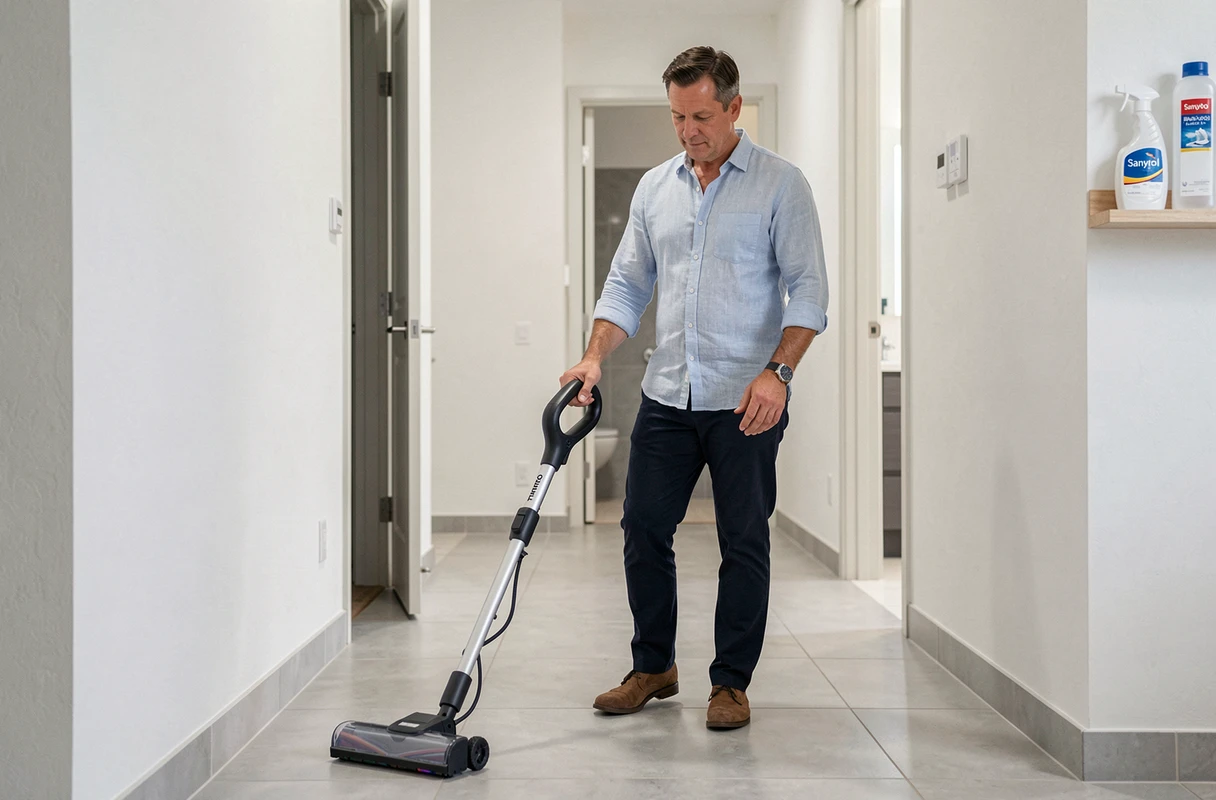
Rinsing After Each Use with Sanytol
Rinsing is the part that many neglect. After using Sanytol, run the device with clear water only for one to two minutes. This flushes out the surfactant residues from the circuit. Then empty the dirty water tank, rinse the filters with lukewarm water, and let the roller brush air dry.
This rinsing protocol protects the internal seals and prevents the accumulation of residues that, over time, clog the sensors and reduce the device’s lifespan.
Official Tineco Solution or Sanytol: Which Cleaning Product to Choose for Your Floors
The Tineco cleaning solution (Deodorizing & Cleaning Solution range) is formulated to produce no foam and to be read correctly by the sensors. It costs more than a bottle of Sanytol, but it preserves the warranty and simplifies maintenance.
Sanytol provides a disinfection that the Tineco solution does not always claim in the same way. For a household with pets or young children, the disinfecting argument of Sanytol carries real weight. The reasonable compromise: use the Tineco solution daily and reserve Sanytol for an occasional use, once a week or every two weeks, while respecting the dosage and rinsing described above.
- Daily use: official Tineco solution or clear water only
- Occasional disinfecting use: Sanytol at less than 3% of the tank, followed by a complete rinse
- Products to avoid in all cases: bleach, highly foaming products, pure white vinegar
The choice depends on what you prioritize between peace of mind (intact warranty) and occasional disinfection. With minimal dosage and systematic rinsing, Sanytol remains a viable option on most Tineco models, but never without precautions.