The diversity of animals is not measured by the number of species described in manuals. It is reflected in the physiological mechanisms, reproductive strategies, and sensory adaptations that the majority of popular content glosses over without dissecting. Here, we will delve into three specific axes that redefine our understanding of the animal kingdom.
Environmental DNA: identifying animal species without observing them
Environmental DNA (eDNA) has changed the game in faunal inventory. A sample of water or soil is now enough to detect the presence of species, without capture or direct observation. The method relies on the analysis of genetic traces left by living organisms in their environment (mucus, epidermal cells, dissolved feces).
We observe that this approach significantly reduces the sampling bias associated with traditional visual inventories. Nocturnal, burrowing, or simply discreet species appear in the results without an observer needing to physically spot them. For aquatic ecosystems, a single liter of water can reveal the fish composition of an entire watercourse.
eDNA also highlights a fact often underestimated: millions of animal species have probably not yet been described. The tool does not merely confirm what we know. It signals unknown genetic sequences that correspond to unrecorded creatures. This shifts the question from mere animal curiosities to a fundamental scientific issue, that of still invisible biodiversity.
Those who wish to explore the richness of the animal world from different angles can learn more on Planète Animaux, which gathers detailed sheets by species.
Animal reproductive strategies: when the male carries the young
Sexual reproduction in animals does not follow a single pattern. In several species, the male takes on gestation after an extended courtship display. The most documented case remains that of syngnathids (seahorses and pipefish), where the female deposits her eggs in a ventral pouch of the male. The male fertilizes, oxygenates, and eventually releases them.
This role reversal is not anecdotal. It reflects a selection pressure on parental investment, where the energetic cost of gestation is transferred to the male. Females, freed from this burden, can produce more eggs in the same season.
Sequential hermaphroditism in reef fish
Some fish change sex during their lifetime. Wrasses and groupers often start as females before becoming males (protandry), while clownfish follow the opposite path (protandry). The trigger is usually social: the disappearance of the dominant individual prompts the transition in the next one in the hierarchy.
This mechanism maximizes the reproductive success of the group by adapting to the available male/female ratio. It is not marginal: it concerns hundreds of species in coral reef ecosystems.
Animal speed: comparing what is comparable
The cheetah remains the fastest land mammal. Popular content often stops there. The comparison gains precision when we distinguish types of locomotion.
- In a dive, the peregrine falcon exceeds 320 km/h, an absolute record among animals in active motion. This speed results from aerodynamic adaptations (deflector nostrils, smooth plumage, compact skeleton).
- In swimming, istiophorids (marlin, sailfish) reach speeds that far surpass those of the cheetah on land, thanks to a hydrodynamic morphology and fast-twitch musculature.
- On land, some insects relative to their body size surpass all vertebrates. The tiger beetle (predatory beetle) covers several dozen times its length per second.
We recommend always relating speed to the environment (land, water, air) and mode of movement (running, flapping flight, diving, swimming). A single ranking of animal speed makes no biological sense without these distinctions.
Sensory perception: parallel worlds in animals
Each animal species perceives its environment through a sensory filter unique to it. Reptiles from the viper family detect infrared radiation through loreal pits, allowing them to locate warm-blooded prey in total darkness. Migratory birds exploit the Earth’s magnetic field via cryptochrome receptors located in the retina.
Echolocation and electroreception
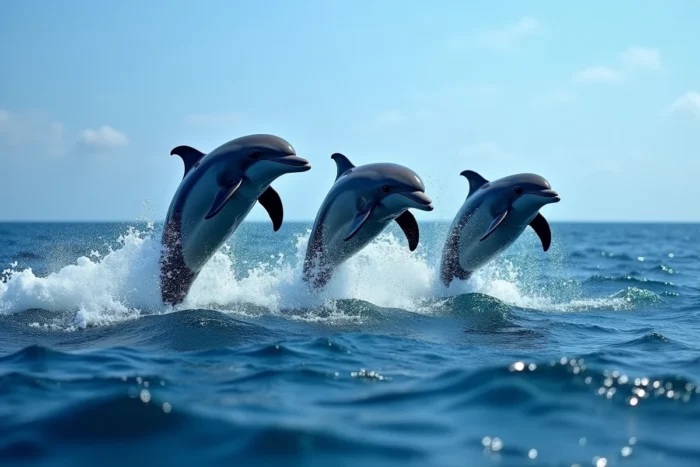
Bats and toothed cetaceans use echolocation to map their environment in three dimensions. The principle is identical (emission of waves, analysis of the return), but the frequencies and organs involved differ radically between air and water environments.
Electroreception remains the least known sense to the general public. Sharks, rays, and platypuses detect electric fields generated by the muscular activity of their prey. In the hammerhead shark, the flattened shape of the head enlarges the detection surface, giving it an advantage in murky waters where vision is ineffective.
- The ampullae of Lorenzini in elasmobranchs (sharks and rays) capture minute variations in electric fields, on the order of nanovolts per centimeter.
- The platypus combines electroreception and mechanoreception in its bill to hunt in freshwater with its eyes closed.
- Some freshwater fish (gymnotids, mormyrids) generate their own electric field and detect distortions caused by surrounding objects.
These sensory systems remind us that nature is not limited to the five human senses. Animal diversity plays out as much in perception as in morphology. Each sensory adaptation tells a specific ecological pressure, a survival problem solved by a solution we could not have imagined.