Catching a fish, observing a dragonfly larva under a stone, making a lure with three pieces of string: fishing goes far beyond the classic framework of a rod placed by the water’s edge. Today, playful activities around fishing cater to all audiences, from children as young as four to adults seeking nature. Here’s an overview of the formats that are renewing the genre.
Fishing and Natural Sciences: When the Water’s Edge Becomes a Laboratory
Have you ever turned over a stone in a stream to see what’s wriggling underneath? This is exactly the starting point of the “fishing and science” workshops that are multiplying in departmental federations and tourist offices.
The principle is simple. Before casting a line, participants explore the aquatic environment with a magnifying glass, literally. Mayfly larvae, freshwater shrimp, small mollusks: these microorganisms serve as indicators of water quality. A stream rich in stonefly larvae is a healthy stream. The child then understands why fishing is done here and not elsewhere.
These workshops are accessible from the age of four, with suitable equipment (fine mesh nets, observation trays). Older participants handle simplified identification keys to recognize species. The actual fishing takes place in the second part of the session, and it takes on a whole new meaning: the fish is no longer a trophy; it is a link in an ecosystem that the child has just explored.
To explore the activities offered by My Fish Book, it’s a good way to find these educational formats near you, categorized by type of activity and region.
Foot Fishing Without Harvest: A Nature Walk Open to All
Foot fishing often evokes a bucket filled with clams and cockles. A variant is gaining ground along the coast: the discovery outing without harvesting for consumption. The goal is not to fill a basket but to observe the fauna of the intertidal zone (the coastal strip exposed at low tide).
On the Guérande peninsula, for example, guided outings take families onto the rocks at low tide. We lift the seaweed, spot the anemones, and identify different species of crabs. The animals are observed on-site and then left undisturbed.
This format is particularly suitable for those who have no interest in traditional fishing. No need for a rod, no need for a license, no need for patience while waiting for a float to move. The walk usually lasts one to two hours, timed with the tide schedule.
- No specific equipment to buy, just boots or old sneakers that won’t be damaged
- Suitable for young children, who love splashing in puddles
- A naturalist guide accompanies the group and explains the fragility of the environment, particularly the spawning areas that should not be trampled
- Returning the turned stones to their place is part of the protocol, to avoid destroying habitats
Birthdays and Group Games by the Water: Fishing as a Group Activity
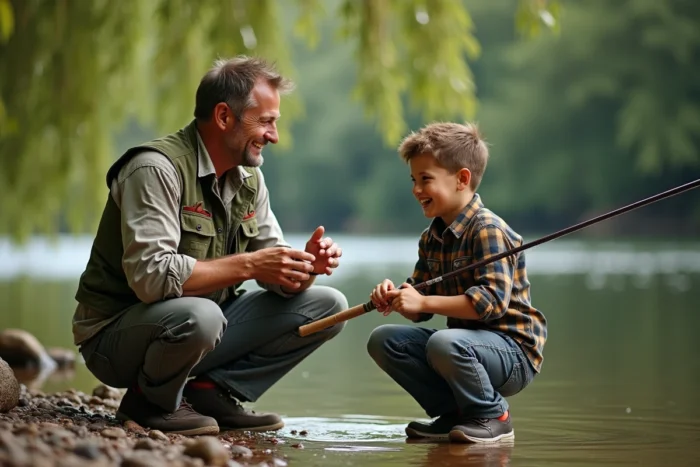
Organizing a birthday around fishing may seem surprising. However, it works very well with children aged six to twelve. Several fishing guide instructors offer short packages, lasting about two hours, where the group alternates between games and practice.
The format combines equipment discovery, bait preparation, and mini-competitions among participants. The competition rarely focuses on the size of the fish (too random with beginners), but rather on the ability to cast correctly, recognize a bite, or identify the caught species.
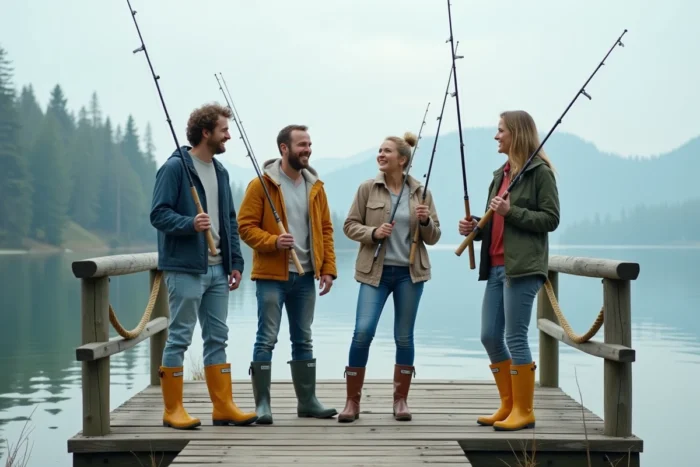
This type of outing forces a rethinking of fishing as a collective outdoor activity, rather than a solitary pastime. The atmosphere resembles a treasure hunt more than a classic fishing trip. The instructors adapt the discourse and equipment to the group’s level, which avoids downtime.
What Changes Compared to a Traditional Course
A fishing course aims for technical progression: learning to set up a line, mastering a cast, understanding the behavior of a predator fish. A birthday or group game aims for immediate pleasure and sharing. The educational aspect takes a back seat to fun.
This distinction is important when choosing. If your child wants to learn to fish seriously, a structured course over several half-days will be much more suitable. If the goal is to have a good time outdoors with friends, the birthday package or group outing is the right choice.
Summer Multi-Activity Programs: Fishing Integrated into Departmental Programs
Several French departments are now incorporating fishing into their active summer programs. The principle: a free or low-cost program that offers a range of sports and cultural activities each week. Fishing is featured alongside kayaking, hiking, or climbing.
The interest of these programs is to reach an audience that would never have walked through the door of a fishing association. No annual registration, no fishing license to purchase for the occasion: the administrative framework is simplified by the organizing community.
In Gironde, the Cap33 program includes fishing initiation sessions in its summer calendar. In Tarn-et-Garonne, fishing activities are scheduled in villages during school holidays. These sessions often last half a day and welcome both children and families.
Finding These Activities Near You
Local tourist offices and departmental fishing federations publish their calendars at the beginning of the season. Fishing and nature houses also relay these events. The most effective search remains to type the name of your department followed by “fishing initiation summer” into a search engine.
- Check if the equipment is provided (it usually is in most activities supervised by qualified instructors)
- Confirm the minimum age, which varies by organization (often starting from four or six years)
- Prepare appropriate clothing: cap, sunscreen, and closed shoes that can handle moisture
Fishing benefits from stepping out of its static image. Between scientific workshops for the youngest, coastal walks without harvesting, and summer programs open to all, there are plenty of formats available. The common thread of these activities remains the discovery of the aquatic environment, well before performance or technique. This is probably the best entry point for those who have never held a rod.