Transitioning from forty years of professional life to completely free days doesn’t happen with the flip of a switch. The first few weeks often feel like an extended vacation, but then a sense of disorientation sets in. To enjoy retirement better, it’s important to anticipate that moment and structure your senior years around concrete markers, not grand abstract principles.
The trap of an empty calendar and how to defuse it
Have you ever noticed that a Sunday with no plans passes more slowly than a busy week? In retirement, this phenomenon occurs every day if nothing is scheduled. The problem isn’t boredom: it’s the loss of social circadian rhythm.
When the alarm no longer rings for work, the body naturally shifts its schedule. Sleep becomes fragmented, meals slide, and fatigue accumulates without apparent effort. Maintaining a fixed wake-up time protects the sleep-wake rhythm much more effectively than herbal tea or dietary supplements.
The idea isn’t to fill every slot like a work agenda. One or two weekly appointments are enough to create a framework for the week: a group class on Tuesday, a market outing on Friday. The rest fills in naturally.
Practical resources exist to identify these activities based on one’s profile. On seniorova.fr, seniors find suggestions tailored to their geographical situation and desires, avoiding the need to start from a blank page.

Physical activity after 60: choosing lasting effort
Walking is the most commonly recommended advice for retirees. It is also the most abandoned after three months, because walking alone in one’s neighborhood eventually becomes tedious.
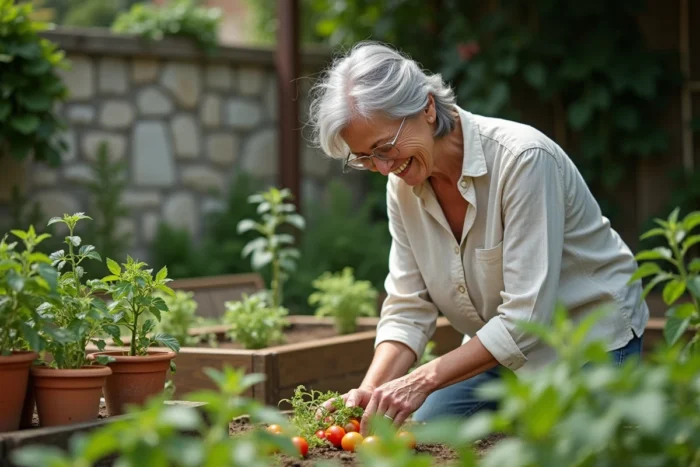
Regular physical activity relies on pleasure, not discipline. A retiree who loves swimming will go to the pool without forcing themselves. Another who hates water but loves gardening will gain comparable benefits from maintaining a vegetable garden.
Criteria for finding a sustainable activity
- The social dimension: a group class (aqua aerobics, tai chi, gentle gym) creates a regular appointment and a peer group, which strengthens long-term commitment
- Geographical accessibility: a gym or park more than twenty minutes away becomes a barrier during the first rainy weeks
- Progressiveness: activities that allow measuring progress (distance traveled, flexibility gained, improved balance) maintain motivation better than routine effort
The goal isn’t performance. Exercising three times a week at moderate intensity is enough to preserve cardiovascular health and memory. Consistency matters more than intensity.
Financial balance in retirement: the trade-offs no one anticipates
The amount of the pension is something everyone calculates before retirement. The expenses that change nature after retirement are much less considered.
Some costs decrease (commuting, lunch expenses, work clothing). Others gradually increase: healthcare costs, leisure activities, domestic energy since one stays home more. The actual budget of a retiree often stabilizes one to two years after retirement, not in the first month.
A frequently overlooked lever concerns supplementary health insurance. Since the end of 2020, any insured person can cancel their mutual insurance at any time after one year of contract, without fees. For seniors whose needs evolve (optical, dental, hospitalization), regularly comparing offers can reduce out-of-pocket expenses without losing coverage.
The savings rate of the French: a signal to understand
According to the Garance x Viavoice Observatory, preparing for retirement has become the second most cited motivation for saving among the French, just after precautionary savings. The household savings rate reached nearly 19% in the first quarter of 2025 according to INSEE, a record since the 1970s.
This figure reflects concern, but also awareness. Saving early allows transforming retirement into a choice rather than a constraint.
Social connection and mental health of seniors: the true factor of longevity
Social isolation is a documented health risk among the elderly. Its effect on health is comparable to that of smoking, according to several public health studies. Retirement severs the professional social link, which sometimes represented the majority of daily interactions.
Rebuilding a network doesn’t necessarily go through associations. Some concrete avenues work better than others:
- Skills-based volunteering, which allows passing on professional know-how to local organizations (tutoring, mentoring young entrepreneurs, administrative assistance)
- Intergenerational activities, which avoid insularity: cooking workshops in libraries, choirs open to all ages, shared gardens
- Combining work and retirement, now better regulated, allows maintaining a foot in active life while receiving a pension
Passing on one’s experience provides a sense of utility that leisure alone cannot replace. Several regional associations organize senior mentoring programs for young professionals.

Health and memory: exams not to postpone
After 60, prevention gradually replaces treatment. Postponing an auditory assessment or an ophthalmological check-up by a few months can sometimes cost years of lost comfort.
Regular monitoring (vision, hearing, blood tests, recommended screenings) is cheaper than late treatment. Supplementary health insurance covers part of these exams, provided one checks the guarantees of their contract.
For memory, activities that combine cognitive effort and social interaction (group board games, learning a language, reading followed by discussions) show better results than solitary screen exercises. The brain ages better when stimulated in a social context.
Fully enjoying one’s senior years doesn’t require a complete overhaul. A stable lifestyle, a physically enjoyable activity, monitored finances, and an active social network form a solid foundation. The rest builds up over the months, at one’s own pace.