A repainted wall, a piece of furniture moved two meters, a changed light fixture: sometimes, transforming your interior comes down to precise gestures rather than major renovations. The classic trap is to accumulate decorative purchases without considering what truly hinders the comfort of a room. Before thinking about colors or materials, it’s better to identify what, on a daily basis, obstructs circulation or darkens the space.
The invisible office in the living room: home layout post-remote work
Have you noticed that an improvised office corner always ends up spilling over onto the coffee table, then onto the sofa? This phenomenon has exploded in recent years with the rise of remote work. The current trend is no longer to dedicate an entire room to work, but to integrate an office space that disappears in the evening.
In practical terms, this involves closed storage solutions. A sideboard with a top that unfolds into a workspace. A bookshelf with a niche designed for a screen, closed by a sliding shutter. A fold-down table fixed to the wall, which folds away in seconds.
The idea is not to hide work out of shame, but to reclaim a living room that looks like a living room after six o’clock. A stray cable, a screen left on standby, a pile of files: these details disrupt the feeling of relaxation much more than a poorly painted wall. If you’re looking for additional ideas to rethink each room, the home section of Sous Tous les Angles addresses these topics from various angles.
Colors and natural light: the two levers that transform a room
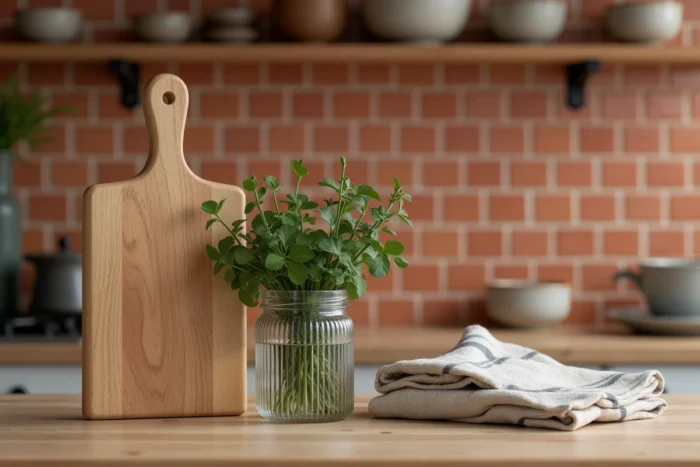
Changing the color of just one wall alters the perception of an entire space. No need to repaint the whole room. The principle is simple: a dark accent wall visually brings the wall closer, adding depth to a room that is too square. Conversely, light shades on the side walls widen a narrow hallway.
The choice of color directly depends on the available natural light. A north-facing room receives cold, gray light. If you apply a glacier blue there, the effect will be dull. A soft ochre or terracotta will correct this coldness without darkening.
Multiplying light sources rather than relying on a single ceiling light
A central ceiling light illuminates everything uniformly, flattening the volumes. The alternative: distribute three to four light points at different heights. A reading lamp near the sofa, indirect lighting behind a piece of furniture, a low pendant above the table.
Each source creates a usage zone. Your living room is no longer a block uniformly lit, but a space with distinct atmospheres depending on the time of day. This approach also works in a kitchen, where under-cabinet lighting radically changes the comfort of meal preparation.
Modular furniture and evolving decor: changing your interior without tearing everything apart
The underlying trend in interior decoration is moving away from heavy renovations. The idea: to design an interior that evolves easily, season after season, without major construction. This relies on easy-to-move furniture and objects designed to be interchangeable.
Why this choice? Because a wheeled sofa, a freestanding shelf, or an extendable table allows you to reconfigure a living room in an hour. Are you hosting six people tonight? The table extends, the extra chair slides in from the bedroom. The next day, everything goes back in place.
- Cushion covers and throws are the most cost-effective elements to change the ambiance of a room: change them twice a year and your living room looks new.
- A large rug delineates a living area in an open room better than any partition. It absorbs sound, warms the floor, and visually structures the sofa area.
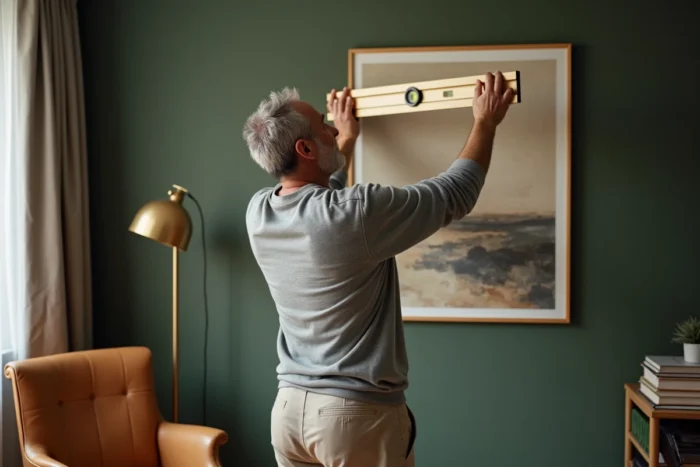
- Frames and posters, placed on a shelf rather than fixed to the wall, can be replaced without holes or patching.
The mix of vintage and contemporary design
Combining a vintage piece with contemporary design items gives character to an interior. A 1960s wooden sideboard placed under a minimalist round mirror creates a contrast that a total catalog look cannot reproduce.
An antique object brings a story, a new object brings functionality. Together, they avoid the impersonal showroom effect. Start with a single vintage piece in the main room. If you like the result, expand to the dining room or entryway.
Targeted renovation of the kitchen and bathroom: the materials that matter
If you have to choose one room to renovate for maximum impact on your daily life, it’s the kitchen. This is the room where you spend the most time standing, where materials wear out the fastest, and where a poor layout pays off in fatigue every day.
The countertop and backsplash concentrate the visual impact of a kitchen. Replacing them without touching the cabinet boxes represents a budget much lower than a complete renovation, often resulting in a spectacular outcome.
- High-pressure laminate mimics wood or stone at a lower cost and resists stains well, but does not handle direct heat well.
- Large-format ceramic tiles, used as a backsplash, can be cleaned with a single wipe and do not yellow over the years.
- For the bathroom, polished concrete applied over existing tiles avoids removal and transforms the room in a day’s work.
In both cases, check the compatibility of the new material with the existing substrate before ordering. A serious craftsman always conducts a diagnostic of the existing covering.
Transforming your home on a daily basis rarely involves a complete renovation. A foldable desk, a wall repainted in the right shade, three well-placed light sources, a replaced countertop: these targeted interventions change the way you live in each room, without waiting months for construction.