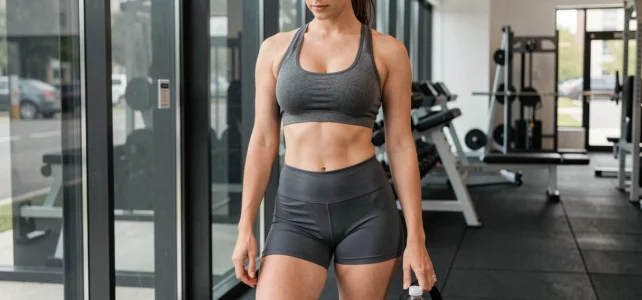
A sports short that rides up in the crotch with every stride or squat is a design flaw, not a body shape issue. Cameltoe in sports shorts results from fabric that is too thin, poorly placed seams, or an unsuitable cut. Understanding these mechanisms allows you to choose clothing that addresses the problem at its source.
Patterning and textile construction: what has changed in sports shorts
Have you ever noticed that some shorts show cameltoe with the first movement, while others stay perfectly in place after an hour of training? The difference lies not in the brand or price, but in four manufacturing choices.
Sportswear manufacturers now incorporate technical specifications targeting cameltoe right from the patterning phase. We are talking about specific criteria that have become almost standard in recent collections.
- Absence of a central seam on the front panel: the classic vertical seam acts like a rail that guides the fabric between the lips. Removing it eliminates the main mechanical factor of cameltoe.
- A recessed diamond-shaped gusset that moves the junction of the panels away from the intimate area instead of centering it over.
- A deeper front rise with a 3D shaping, so the fabric hugs the area without pressing.
- A sufficiently dense weight (manufacturers aim for a minimum of 220 GSM) to prevent the front panel from thinning under tension.
Nike, for example, promotes its Universa range with the mention “no-seam front.” The argument is no longer aesthetic: the absence of a front seam prevents the fabric from migrating to the crotch during exertion. Cameltoe is treated as a product design issue, not just a matter of size or a last-minute trick.
Some manufacturers even integrate a specific verification protocol into their development cycle: squats, sitting cross-legged, stair climbing under front lighting. If the short fails any of these tests, the patterning is redone.
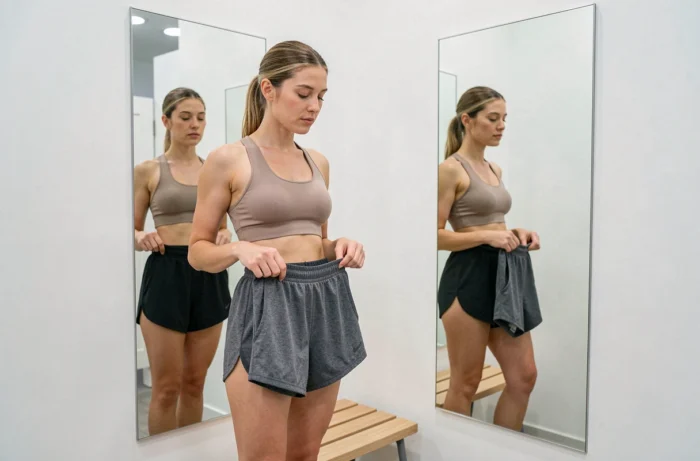
Exploring solutions against cameltoe in sports shorts helps identify models designed according to these criteria, especially among alternatives to classic bike shorts.
Anti-cameltoe sports shorts: criteria to check before buying
Knowing the technical specifications is good. Being able to spot them on a product sheet or in a fitting room is what makes the difference.
The fabric: density and compression
A thin and highly stretchy fabric will hug every contour instead of smoothing it out. Favor shorts whose specifications indicate a high weight. A dense fabric offers gentle compression that keeps the front panel in place without pressing.
A short that becomes transparent during a squat is too thin to prevent cameltoe. This simple test, which can be done in the fitting room, eliminates most problematic models.
The cut: size and depth of rise
A short that is too small pulls the fabric up with every movement. Taking a size up does not solve anything if the rise is poorly designed: the fabric will simply have more room to bunch. Look for a deep front rise and a crotch that does not ride up when you bend your knees.
The right size is not enough if the construction of the short is flawed. A well-patterned short in your usual size should never require readjustment during training.
The seams: placement and type
Run your finger over the front of the short. If you feel a vertical seam running from the waistband to the crotch, the risk of cameltoe is high. Recent models use single-piece front panels or offset side seams.

Underwear and sports: a often underestimated factor
The short may be perfectly designed, but if the underwear worn underneath creates folds or bulk, the result will be the same. A panty with thick seams at the gusset accentuates the demarcation instead of masking it.
Two options work in practice:
- Wear seamless underwear made of thin technical fabric that lies flat under the short.
- Opt for a short with an integrated liner and skip the underwear. Many running or fitness shorts include a technical gusset designed to be worn against the skin.
Panty liners or folded paper do not hold up during exertion. They shift, crumple, and ultimately worsen the problem. These temporary solutions consistently disappoint during sports.
Loose fit or tight bike shorts: which type of short best avoids cameltoe
A loose short (running or basketball cut) limits cameltoe by definition: the fabric does not press against the skin. The trade-off is less muscle support and sometimes discomfort during floor exercises.
Tight bike shorts, on the other hand, offer better support but expose you more to cameltoe if their construction is not suitable. This is where the technical criteria discussed earlier (absence of front seam, dense weight, recessed gusset) become crucial.
A well-designed bike short protects as much as a loose short, with the added benefit of support. The choice depends on your activity: running, HIIT, yoga, weightlifting. For movements involving leg spreading (squats, lunges), a bike short without a front seam is the most reliable choice.
Cameltoe in sports shorts is not a fate tied to the body. It is a clothing flaw that manufacturers are now correcting right from the design stage. Checking the fabric, seams, and rise depth before buying remains the most effective way to stop worrying about it during training.