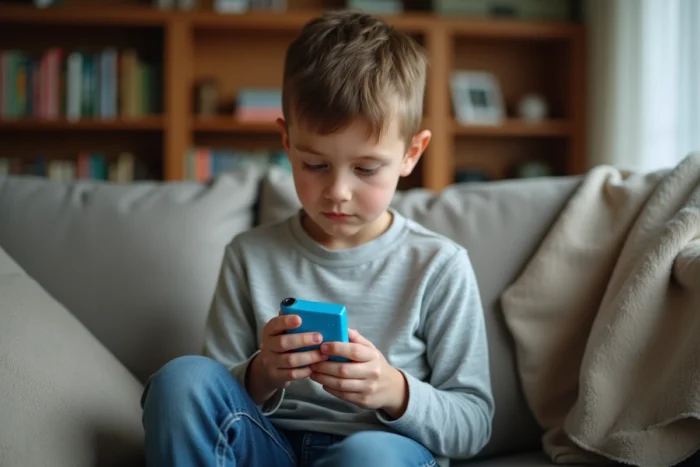
A child who coughs every night for ten days, an inhaler forgotten in the backpack, a school trip canceled due to a lack of clear protocol: we all know these situations where asthma takes over daily life. Managing asthma in children relies less on theoretical knowledge of the disease and more on concrete, repeated reflexes adapted to each living context.
Room of the asthmatic child: underestimated pitfalls
We often think we have done what is necessary by removing the carpet or washing the sheets at 60 °C. In practice, feedback on this point varies, but the bedding remains the primary reservoir of dust mites even with regular maintenance. Certified dust mite covers placed on mattresses and pillows provide a more reliable physical barrier than frequent washing alone.
The ventilation of the room plays a direct role in the concentration of allergens and indoor pollutants. Opening the windows wide for ten minutes in the morning reduces ambient humidity and disperses volatile organic compounds emitted by furniture or cleaning products.
Two often overlooked points deserve attention:
- Stuffed animals and decorative cushions accumulate dust and dust mites. Limiting them to one or two washable items makes maintenance easier without depriving the child of their environment.
- Scented candles, oil diffusers, and air fresheners release irritating particles for the bronchi. It is better to ban them from the bedroom and common living areas.
- Wall moisture (stains, budding mold behind a piece of furniture) signals a problem that no medication can compensate for. Treating the source of moisture is a priority before adjusting the maintenance treatment.
To deepen the overall management and better manage asthma in your child, it is essential to articulate these domestic actions with medical follow-up.
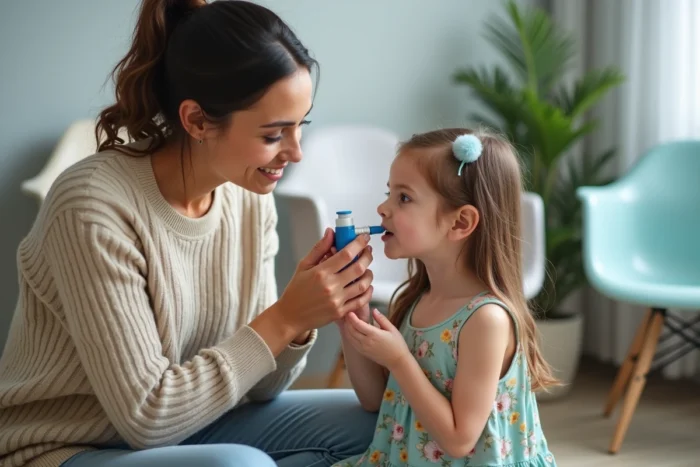
Inhalation technique: correcting common mistakes in children
A well-prescribed treatment but poorly inhaled does not protect the bronchi. This is the most common problem, and it often goes unnoticed between two consultations.
Spacer and face mask for children under 6 years
In young children, the metered-dose inhaler alone has almost no effectiveness. The spacer with an appropriate mask is the only reliable device for delivering the medication to the bronchi. The mask must fit tightly against the face, with no lateral leaks. Five to six calm breaths should be taken after each puff.
The most common mistake is removing the mask too quickly, before the child has inhaled sufficiently. A tip: count slowly to ten with the child to turn the action into a predictable routine.
Dry powder and breath-actuated coordination after 6 years
Dry powder inhalers require a firm and rapid inhalation, unlike traditional aerosols. If the child blows into the device instead of inhaling, the dose remains in the cartridge. Checking the technique at each medical consultation helps correct any deviations before they lead to a resurgence of symptoms.
Asthma and sports at school: concrete protocol for parents
Exercise-induced asthma remains the primary source of concern for parents at the start of the school year. There is hesitation between protecting the child and allowing them to participate. The answer is simple: a well-treated asthmatic child can and should play sports.
The individualized welcome project (PAI) formalizes the instructions to the educational team. It specifies the authorized medications, warning signs, and the actions to take in case of a crisis. Without this document, the teacher has no basis for action.
Some reflexes before exercise reduce the risk of bronchospasm:
- A gradual warm-up of ten to fifteen minutes allows the bronchi to adapt to the increase in airflow.
- Two puffs of a short-acting bronchodilator, fifteen minutes before sports, prevent exercise-induced asthma in the majority of affected children.
- In cold and dry weather, a scarf or neck warmer in front of the mouth warms and humidifies the inhaled air, limiting bronchial irritation.
After exercise, a gradual return to calm is better than a sudden stop. If coughing or wheezing persists for more than ten minutes after the activity ends, administer the bronchodilator again and inform the treating physician.
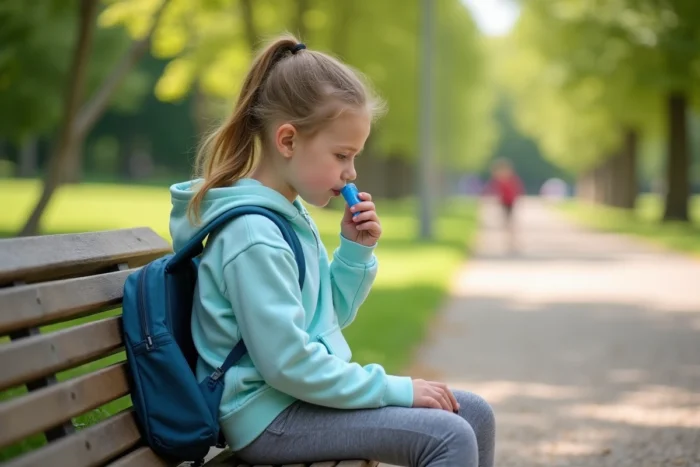
Pollution and ozone peaks: adapting the routine of the asthmatic child
Ozone pollution episodes, more frequent during periods of high heat, worsen respiratory symptoms in asthmatic children. Recent environmental indicators confirm this upward trend.
When a pollution peak is announced, shifting outdoor physical activities to early morning limits exposure. Ozone reaches its maximum concentrations in early afternoon. Keep the child indoors between 12 PM and 4 PM on alert days, with windows closed.
Secondhand smoke amplifies the effect of outdoor pollution. Children whose parents smoke are at a significantly increased risk of asthma attacks. Stopping smoking in the household remains the most protective environmental measure, far ahead of any air purifier.
Medical follow-up and maintenance treatment: what changes the frequency of attacks
A maintenance treatment based on inhaled corticosteroids reduces chronic inflammation of the bronchi. Many parents stop it as soon as the child feels better, which reignites the inflammatory cycle within weeks.
The doctor adjusts the treatment level according to the frequency of symptoms, the number of nighttime awakenings, and the use of rescue bronchodilators. Using the bronchodilator more than twice a week indicates poorly controlled asthma.
Atopic march, this frequent sequence where infant eczema precedes the onset of asthma and then allergic rhinitis, justifies early allergological follow-up. Identifying the allergens involved (dust mites, pollen, pets) guides both the medical treatment and the avoidance measures at home.
Managing a child’s asthma is a long-term process, with regular adjustments. Each consultation is an opportunity to check the inhalation technique, reassess the home environment, and ensure that the school PAI is up to date. It is these repeated, unremarkable actions that sustainably reduce the frequency of attacks and emergency visits.