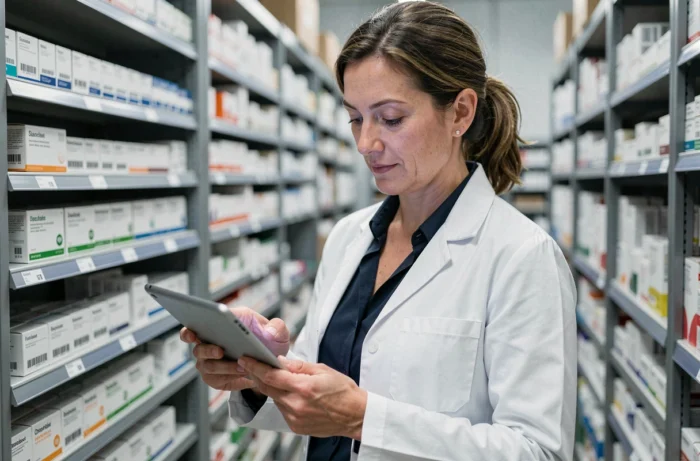
A medication that arrives at the pharmacy with a break in the cold chain or a delivery delay does not heal anyone. In France, pharmaceutical logistics faces increasingly strict regulatory constraints and a growing demand for temperature-sensitive products. Optimizing this supply chain is no longer just a lever for competitiveness; it is a public health obligation.
ANSM Sanctions: Regulatory Pressure Accelerating Logistical Innovation
Technologies and best distribution practices play a significant role in discussions about pharmaceutical logistics. However, the concrete trigger for investments remains more prosaic: financial penalties.
The ANSM has imposed fines of several hundred thousand euros on wholesalers for inadequate logistical means. The decisions targeted the inability to deliver pharmacy orders within 24 hours and to maintain regulatory stock levels.
These obligations are not new. Each wholesaler must hold at least two weeks of stock for their regular customers and offer all marketed presentations (excluding hospital products). What is changing is the strict enforcement of these rules, with deterrent amounts.
This pressure drives companies to adopt real-time order forecasting tools and automated stock management. Without the ability to anticipate demand and react within hours, the financial and legal risks become too high. Players like Pharmalog support this transition by structuring the logistical flows of the sector to meet these regulatory requirements.
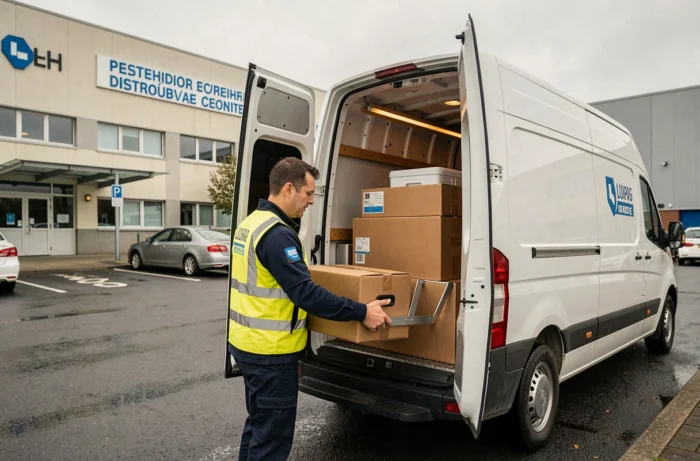
Pharmaceutical Cold Chain: Technologies Changing Medication Transport
Have you ever noticed the mention “store between 2 °C and 8 °C” on certain medications? Behind this simple indication lies a complex logistical infrastructure that must guarantee the temperature at every step, from the factory to the patient.
The demand for temperature-controlled transport is exploding, driven by biological therapies, vaccines, and GLP-1 treatments (used notably against diabetes and obesity). Major logistics companies are investing heavily in cold chain networks dedicated to the pharmaceutical sector.
Electric Refrigerated Vehicles and Connected Sensors
The renewal of delivery fleets now includes electric refrigeration units on small trucks. These units replace traditional diesel systems, with a dual advantage: reduced emissions and more precise thermal regulation.
Embedded IoT sensors continuously transmit the temperature, humidity, and geolocation of each package. In case of deviation, an alert is sent before the product is compromised. This end-to-end traceability meets the requirements of Good Distribution Practices (GDP) and provides documented proof in case of inspection.
What This Changes in Practice
- The pharmacist receives a complete thermal history for each delivery, not just a “compliant” note on a transport document.
- Losses related to temperature excursions decrease significantly, reducing stock shortages in pharmacies.
- Insurers and health authorities have usable data in case of disputes or batch recalls.
Stock Management in Healthcare Facilities: Robots and Logistics on the Floor
Optimization does not stop at the warehouse door. In hospitals and clinics, managing pharmaceutical products close to the patient represents a logistical challenge in its own right.
ANAP (National Agency for Health Performance) supports facilities in establishing a logistics function on the floor. The principle: bring stock management closer to the place of care, rather than centralizing everything in the internal pharmacy (PUI).
In practice, this involves automated cabinets in care services. These cabinets control access, record each withdrawal, and automatically trigger restocking. Healthcare staff spend less time searching for medication and more time with patients.
Dispensing Machines and Unit Traceability
Dispensing machines go beyond simple storage. They prepare patient-specific doses, reduce dispensing errors, and ensure unit traceability up to administration.
For facilities managing hundreds of references, the benefits are twofold:
- Measurable reduction in medication errors related to product or dosage confusion.
- Stock optimization with expiration alerts and consumption tracking by service.
- Freeing up pharmacists’ time for clinical pharmacy activities (prescription analysis, medication reconciliation).

Sustainable Pharmaceutical Logistics: Reducing the Footprint Without Compromising Quality
The pharmaceutical sector produces a considerable volume of packaging, transport waste, and emissions related to refrigeration. Sustainability is no longer a marketing argument; it is an expectation from clients and authorities.
Concrete levers exist. The transition to electric refrigeration units, already mentioned, is one of them. Optimizing delivery routes through algorithms reduces the kilometers traveled. Consolidating orders by geographical area limits the number of vehicles used.
Some logistics companies are also working on reusable insulated packaging. Instead of single-use polystyrene boxes, validated containers for multiple thermal transport cycles are beginning to be deployed. The initial extra cost is offset by the reduction in waste and recurring packaging purchases.
Pharmaceutical logistics in France is undergoing a rapid transformation, driven by both regulation and technological advancements. The recent financial penalties from the ANSM remind us that logistical performance directly conditions access to medications. Facilities and distributors that integrate these tools, connected sensors, dispensing machines, and electric fleets are not innovating for the sake of innovation. They are responding to a reliability requirement that patients expect without even thinking about it.