A home aquarium functions as a closed ecosystem where each parameter (water quality, lighting, feeding) depends on the others. When one parameter drifts, the consequences propagate in a chain: algae proliferation, fish stress, plant mortality. Simplifying the daily management of an aquarium involves identifying the tasks that generate the most imbalances when forgotten or poorly calibrated, and then making them reliable.
Nitrogen Cycle and Water Stability: The Underestimated Parameter
Before discussing equipment or routines, it is essential to understand what makes an aquarium unstable. The nitrogen cycle transforms organic waste (food remnants, excrement) into ammonia, then into nitrites, and finally into nitrates thanks to the nitrifying bacteria present in the filter and substrate.
When this cycle is mature and stable, the water remains healthy with minimal intervention. When it is disrupted (too aggressive filter cleaning, massive water change, overpopulation), ammonia levels rise and fish experience direct stress.
The first real simplification is therefore not to sabotage this cycle. Rinsing filter media with aquarium water rather than tap water, never replacing more than one-third of the water volume at once, and adjusting the population to the actual tank volume. These precautions eliminate most emergencies that beginner aquarists attribute to bad luck. Resources like the main page of My Fish Book help structure this fundamental knowledge from the start.
Automating Aquarium Lighting and Temperature
Lighting and temperature are the two parameters easiest to automate, and also those whose irregularity causes the most visible disorder.
Programmable Lighting and Plant Growth
Irregular lighting promotes algae at the expense of plants. Aquatic plants need a stable photoperiod to ensure their photosynthesis. A basic timer plugged into the LED fixture is enough to guarantee this regularity.
A stable photoperiod reduces algae proliferation much more effectively than a chemical treatment applied afterward. The optimal duration varies according to plant species, but consistency matters more than the duration itself.
Thermal Regulation and Fish Well-Being
Sudden temperature fluctuations generate physiological stress in fish, weakening their immune system. A submersible heater with an integrated thermostat maintains the temperature without manual intervention.
A common pitfall: placing the aquarium near a sun-exposed window or a radiator. No thermostat can effectively compensate for a location that creates thermal discrepancies of several degrees throughout the day. The choice of location precedes the choice of equipment.
Automated Fish Feeding Management
Overfeeding is the primary cause of water quality degradation in a home aquarium. Uneaten food decomposes, overloads the biological filter, and produces excess ammonia.
Automatic feeders solve this problem by delivering calibrated portions at regular intervals. Some models allow programming multiple feedings per day and varying the types of food distributed. For vacation trips, these devices prevent the need to rely on a neighbor who, out of generosity, might pour three times the necessary amount.
A rarely discussed point: adapting the amount of food to the actual number of fish present in the tank. After a loss, many aquarists continue to feed for the initial count. The automatic feeder does not correct this mistake. The dose must be recalibrated manually when the population changes.
Connected Aquarium: Remote Maintenance Management
Next-generation aquariums integrate sensors connected to a mobile app. According to an article by TF1 Info dedicated to ultra-connected new aquariums, these systems allow users to adjust lighting, temperature, and filtration levels from a phone, with notifications when human intervention becomes necessary.
This approach transforms maintenance from a burdensome routine into occasional monitoring. Instead of manually testing water parameters each week, the system alerts users to deviations before they become critical.
TF1 Info also mentions aquariums designed to promote fish exercise through artificial currents that replicate natural conditions. This aspect of animal welfare goes beyond mere management convenience. It shows that automation is not just about saving time: it can improve living conditions in the tank.
The limitation of these systems remains their cost and installation complexity. For a small freshwater aquarium, a reliable heater, a timer for lighting, and a food dispenser cover most needs without requiring an app or Wi-Fi connection.
Minimal Maintenance Routine for a Balanced Aquarium
Even with automation, some tasks remain manual. Reducing them to the bare minimum requires knowing which have a real impact on the ecosystem.
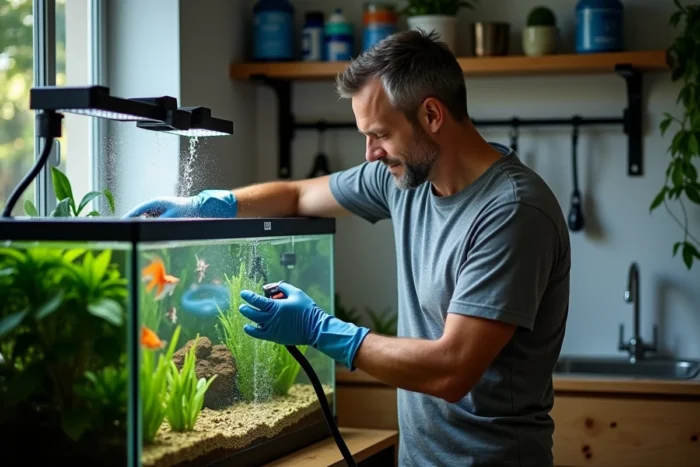
- Partial water changes (one-quarter to one-third of the volume) remain the most reliable method for lowering accumulated nitrate levels. The frequency depends on the population and volume, but regular intervention prevents emergency corrections.
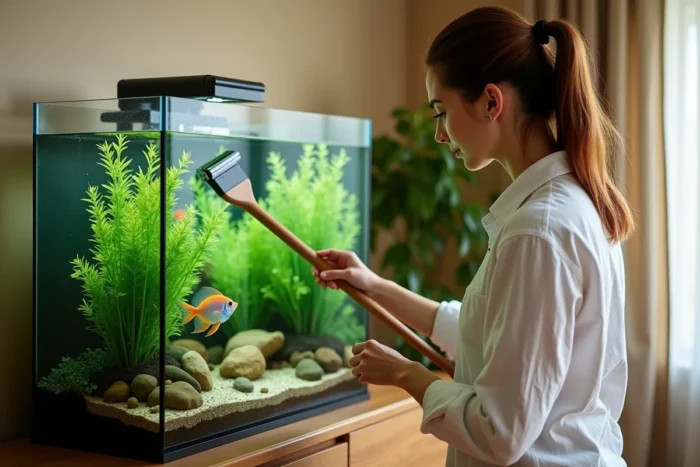
- Cleaning the interior glass with a magnet or scraper takes just a few seconds and prevents algae from establishing permanently. The longer you wait, the longer the task becomes.
- Daily visual inspection (fish behavior, plant condition, water appearance) detects problems before they escalate. This habit of a few seconds effectively replaces frequent chemical tests.
A well-sized and properly equipped aquarium requires less time than a small, under-equipped tank. A larger water volume dilutes pollutants, stabilizes temperature, and forgives small dosing errors. Choosing a tank slightly larger than the minimum recommended for your fish is, paradoxically, the best way to simplify your life.
The daily management of an aquarium can be reduced to a handful of short actions if the initial setup is correct and critical parameters are automated. The rest is observation, and that is precisely what makes fishkeeping enjoyable rather than burdensome.