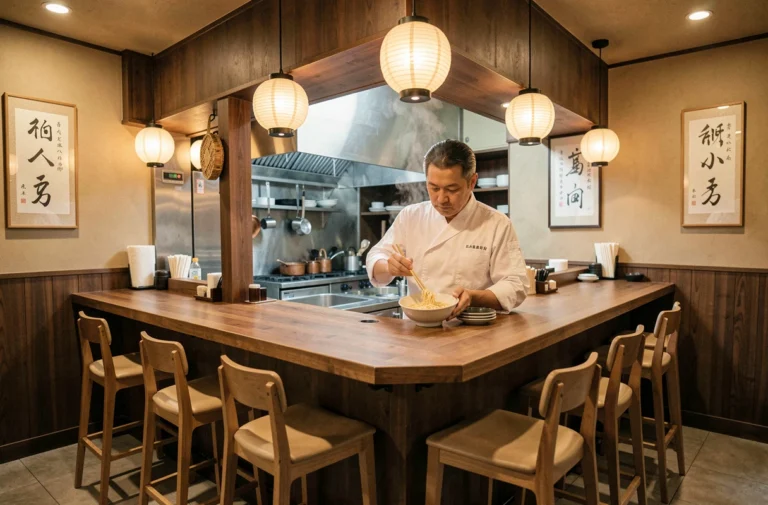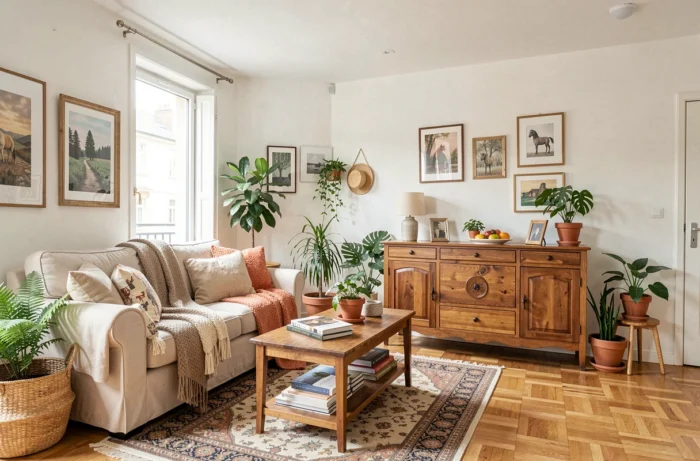
Transforming an interior without breaking the budget requires knowing where to focus your efforts. Which decorative gestures offer the best visual impact-to-actual cost ratio? This article reviews ten concrete ideas, categorized not by preference but by type of intervention, to help you identify those that suit your space and constraints.
1. Warm-toned accent wall instead of bright color
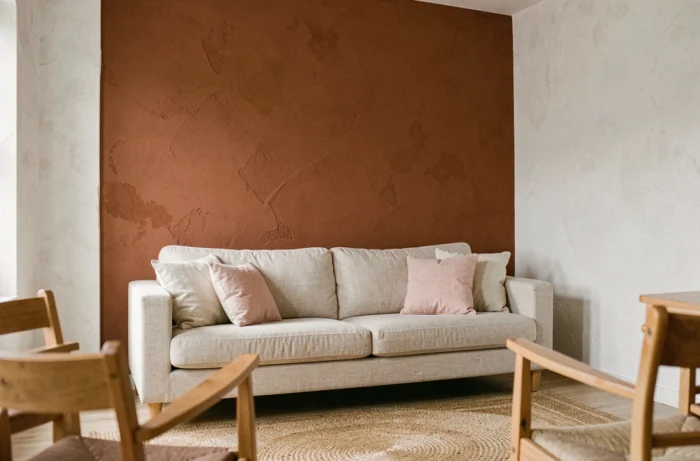
2026 decor trends favor warm and muted tones (terracotta, clay, warm off-white, sage green) over the bright colors that dominated previous advice. A single wall painted in a warm hue changes the perception of the entire room.
The cost is limited to a can of paint and a few hours of work. For renters, washable paints allow you to return to the original state without losing your deposit. The result is immediate and requires no specialized tools.
If you’re looking for other techniques for your walls and DIY projects, you can learn more about L’Atelier du Bricolage, which details several complementary approaches.
2. Indirect lighting with accent lamps
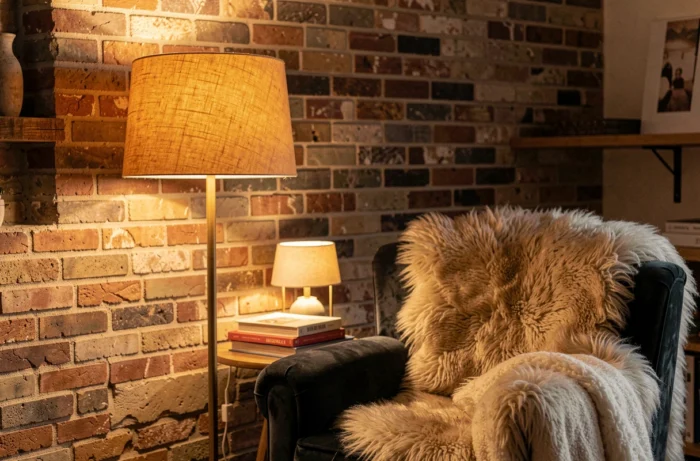
Lighting is the most underestimated lever in low-cost decoration. Replacing a single ceiling light with two or three low light sources (table lamp, LED string lights, adjustable floor lamp) transforms the ambiance of a living room or bedroom.
Warm temperature bulbs enhance the cocoon-like feeling sought by current trends. The investment remains modest, and indirect lighting creates a depth that central lighting does not produce.
3. Mismatched cushions and textiles for the living room
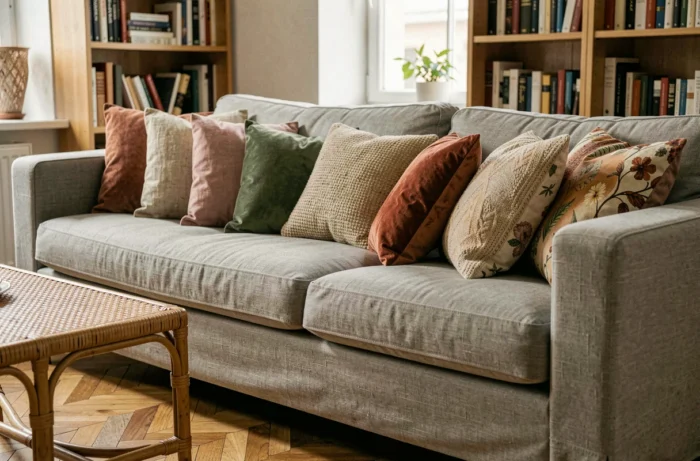
Changing the cushions on a sofa is akin to changing the color palette of the entire room. The 2026 trend values varied textures: linen, corduroy, crinkled cotton. Mixing two or three materials on the same sofa gives a curated look without real effort.
Opting for removable covers allows for washing and replacing them with the seasons. Three well-chosen cushions have more impact than a new piece of furniture.
4. Targeted accumulation of green plants
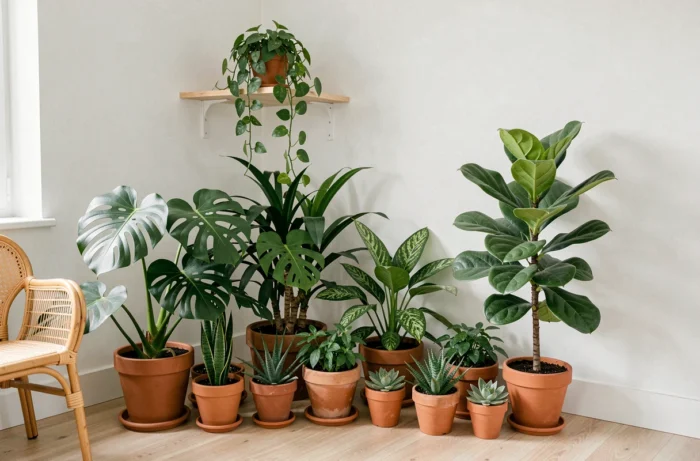
Plants remain a classic in low-cost decor, but the difference lies in placement. An isolated pot on a shelf goes unnoticed. Three to five plants grouped at varying heights (floor, shelf, hanging) create a true focal point.
Here are a few criteria to maximize the effect without excessive maintenance:
- Choose low-light species for north-facing rooms (pothos, sansevieria, zamioculcas)
- Vary the containers: wicker planters, raw ceramic, woven baskets
- Group plants on the same visual plane rather than scattering them throughout the room
5. Thrifted or second-hand furniture as a centerpiece
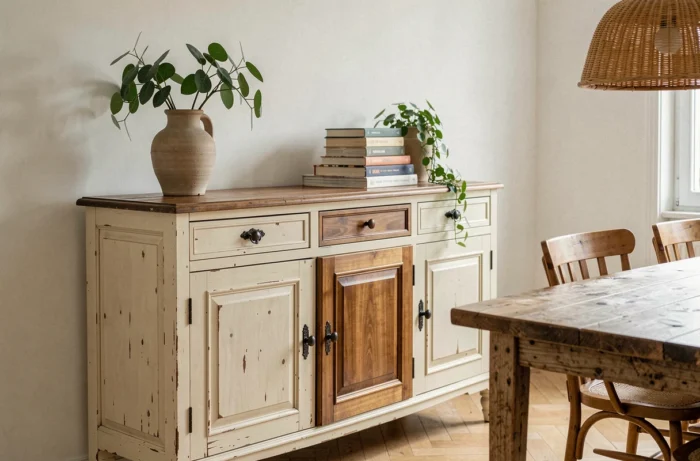
Second-hand items have changed status. In 2026, vintage furniture and thrifted objects are valued for their unique character, not just for their price. An antique sideboard, a solid wood coffee table, or a 1970s armchair brings a personality that no entry-level new furniture can replicate.
A thrifted piece serves as a visual anchor around which the rest of the room is organized. Flea markets, recycling centers, and peer-to-peer resale platforms offer a constantly renewed stock.
6. Adhesive wallpaper on a small surface
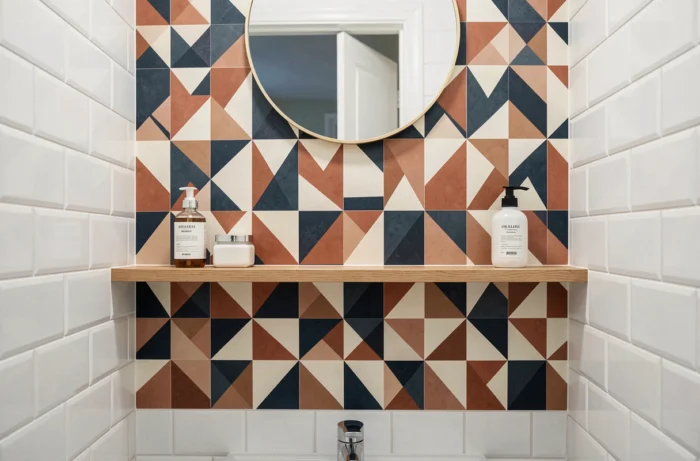
Repositionable adhesive wallpaper allows you to work on a wall section, a niche, or the inside of a shelf without commitment. Application takes only a few minutes and requires no glue or tools.
For a polished look, limiting the application to a small area works better than wallpapering an entire wall. A wallpapered niche draws the eye without overwhelming the space.
7. Frames and printed illustrations in a wall composition
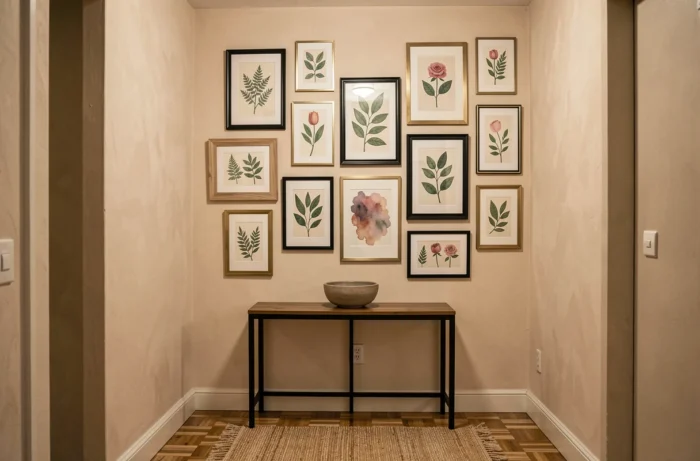
A wall of frames remains one of the most accessible ways to personalize an interior. The cost focuses on the frames themselves (recovered or bought in bulk), while the content can be printed at home.
The composition gains coherence when a constraint is set: same frame color, same size, or the same color theme for the images. Arranging the frames on the floor before drilling avoids placement mistakes.
8. Strategically placed mirror to enlarge the room
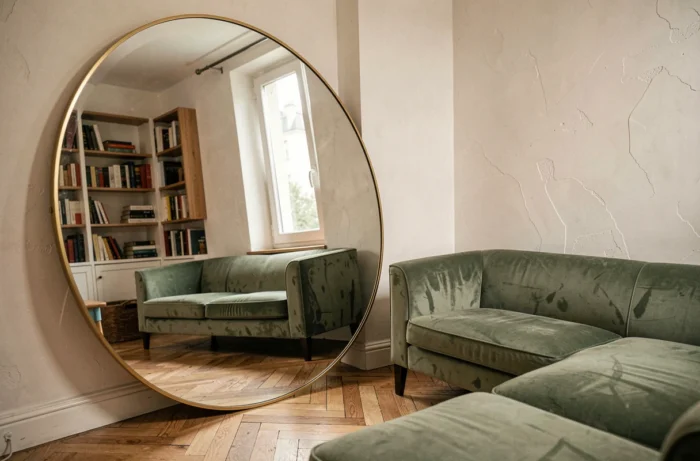
A large mirror placed opposite a source of natural light visually doubles the perceived space. The effect is particularly useful in small areas, entryways, or narrow hallways.
Vintage mirrors or those with rattan frames fit into the trend of natural materials. Leaning against the wall, a large mirror requires no drilling.
9. Reorganization of existing furniture
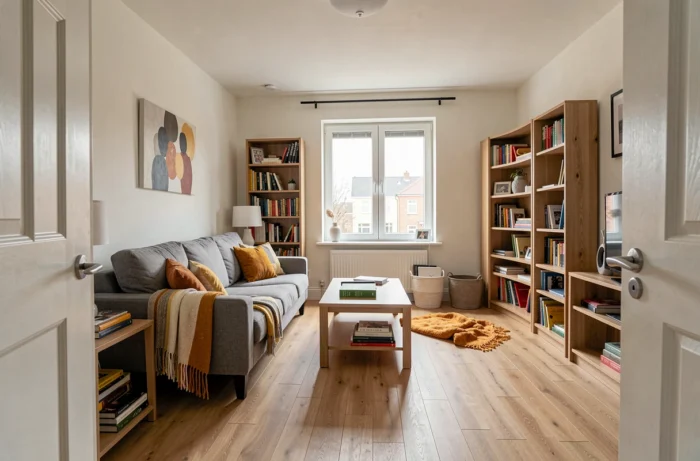
Moving a sofa, rotating a table, clearing a corner: these actions cost nothing and produce an immediate change. Sometimes, pulling the sofa a few centimeters away from the wall is enough to break a too-rigid arrangement.
Here are some concrete ideas for rearrangement:
- Create a reading nook by isolating an armchair with a lamp and a small side table
- Orient the sofa towards the window rather than the screen to change the flow of the room
- Free up the center of the room by pushing secondary furniture against the walls
10. Open storage in wood or metal as a decorative element
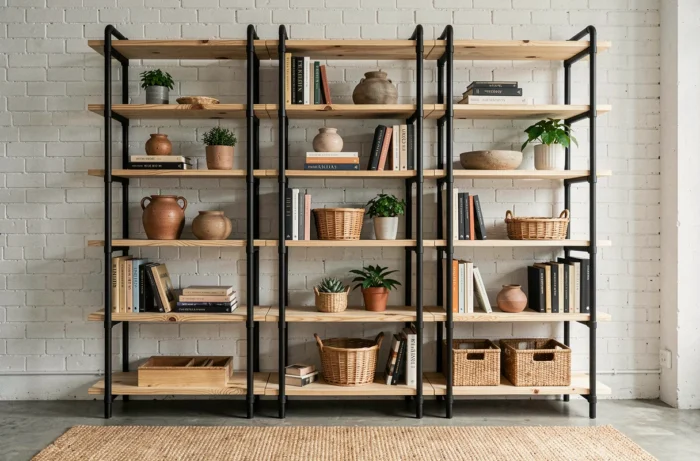
An open shelf in raw wood or black metal serves two functions: storage and decoration. The principle is to alternate books, decorative objects, and empty spaces to avoid the overloaded library effect.
Open storage replaces the need to buy additional decorative items since everyday objects (candles, baskets, ceramics) become decoration themselves. This type of shelf fits well in the living room, bedroom, or bathroom.
Among these ten ideas, the most cost-effective gestures remain those that modify light or layout: rethought lighting and reorganized furniture transform an interior without any purchases. Wall interventions (painting, wallpaper, frames) come next, with limited costs for visible results from the very first hour.